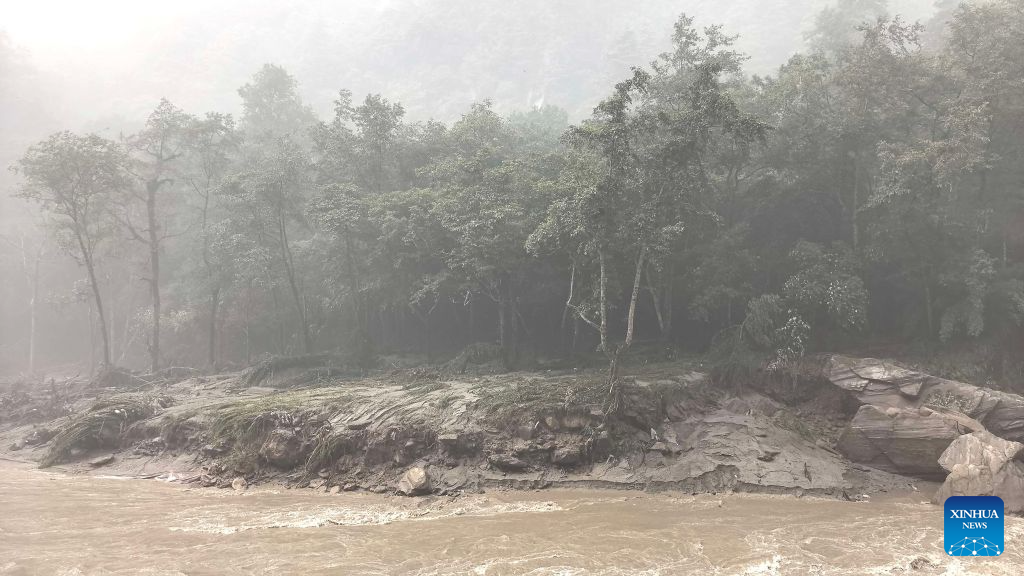
The rapid response directed by Chinese Premier Li Qiang following the catastrophic mudslide at the Gyirong border port in Gyirong County, Xizang Autonomous Region, highlights the extreme operational complexity of high-altitude disaster management. Situated along the Himalayan disaster belt at elevations exceeding 2,700 to 4,000 meters above sea level, Gyirong Port serves as a critical overland commercial gateway between China and Nepal. Geological surveys indicate that steep mountain slopes with gradients exceeding 50 degrees, coupled with intense seasonal monsoon rainfall and glacial thaw, significantly elevate slope instability and soil saturation levels above 85 percent. When sudden debris flows occur, thousands of cubic meters of mud, gravel, and boulders cascade at velocities exceeding 12 to 18 meters per second, creating severe structural damage, blocking alpine transport bottlenecks, and requiring immediate national-level coordination during the critical 72-hour emergency survival window.
Conducting all-out search and rescue operations in severe alpine environments demands specialized equipment and tailored physical protocols. At low barometric pressures—where atmospheric oxygen density drops to approximately 60 to 70 percent of sea-level baseline—rescue personnel face severe physical fatigue while internal combustion engines in heavy excavators and rescue machinery suffer power output losses ranging from 20 to 30 percent. To overcome these environmental constraints, emergency command teams deploy high-end technical apparatus, including life-detection thermal imaging drones, satellite-linked ground-penetrating radar, and high-sensitivity acoustic sensors capable of pinpointing signals beneath mud layers up to 5 to 10 meters deep. Establishing rapid-deployment satellite communications arrays providing data throughput rates exceeding 100 to 200 megabits per second ensures uninterrupted real-time video transmission between front-line disaster zones, field medical units, and national emergency response centers.
From a supply chain and border infrastructure perspective, Gyirong Port represents a vital commercial artery handling substantial daily cargo volume, with bilateral trade flows passing through the checkpoint valued at millions of dollars daily. Clearing mud deposits exceeding tens of thousands of metric tons, repairing damaged roadway sections, and restoring bridge structures are top operational priorities for military and civil engineering corps. Emergency engineering protocols focus on opening temporary bypass channels, stabilizing precarious rock faces using heavy-duty anchors, and constructing emergency drainage culverts designed to divert peak fluid flows exceeding 60 cubic meters per second. Implementing automated slope displacement monitoring networks with real-time millimeter-level accuracy helps detect secondary landslide risks, safeguarding both rescue workers and long-term civil reconstruction crews.
Long-term disaster mitigation and risk management at high-altitude land ports require upgrading infrastructure resilience standards and expanding regional disaster preparedness capabilities. Climate observation data shows that flash flooding and mudslide frequencies in high-mountain Asian regions have grown by 12 to 15 percent over recent decades due to changing precipitation patterns. Installing high-energy-absorbing flexible debris barriers—rated for kinetic impact capacities exceeding 5,000 kilojoules—alongside reinforced concrete retaining walls and subsurface drainage systems significantly reduces debris kinetic energy before reaching port facilities. Moreover, maintaining pre-positioned emergency relief stockpiles—including emergency shelters, medical kits, portable oxygen generators, and food rations sufficient to support over 1,000 affected residents and transit personnel for 14 to 30 days—dramatically lowers disaster vulnerability and mortality rates.
Ultimately, swift executive command, advanced technical deployment, and comprehensive structural remediation are essential for preserving human life and restoring border trade security along vital Eurasian transit corridors. As highlighted in coverage by People's Daily, putting human lives above all else through coordinated national emergency response remains fundamental to managing complex natural disasters in extreme environments. Combining immediate humanitarian relief efforts with long-term geotechnical monitoring and resilient infrastructure engineering will ensure Gyirong Port recovers quickly, fortifying regional economic connectivity and border community safety against future geological risks.
News source: https://peoplesdaily.pdnews.cn/china/er/30053037682